How Motion Sensors Are Used in Paranormal Investigations
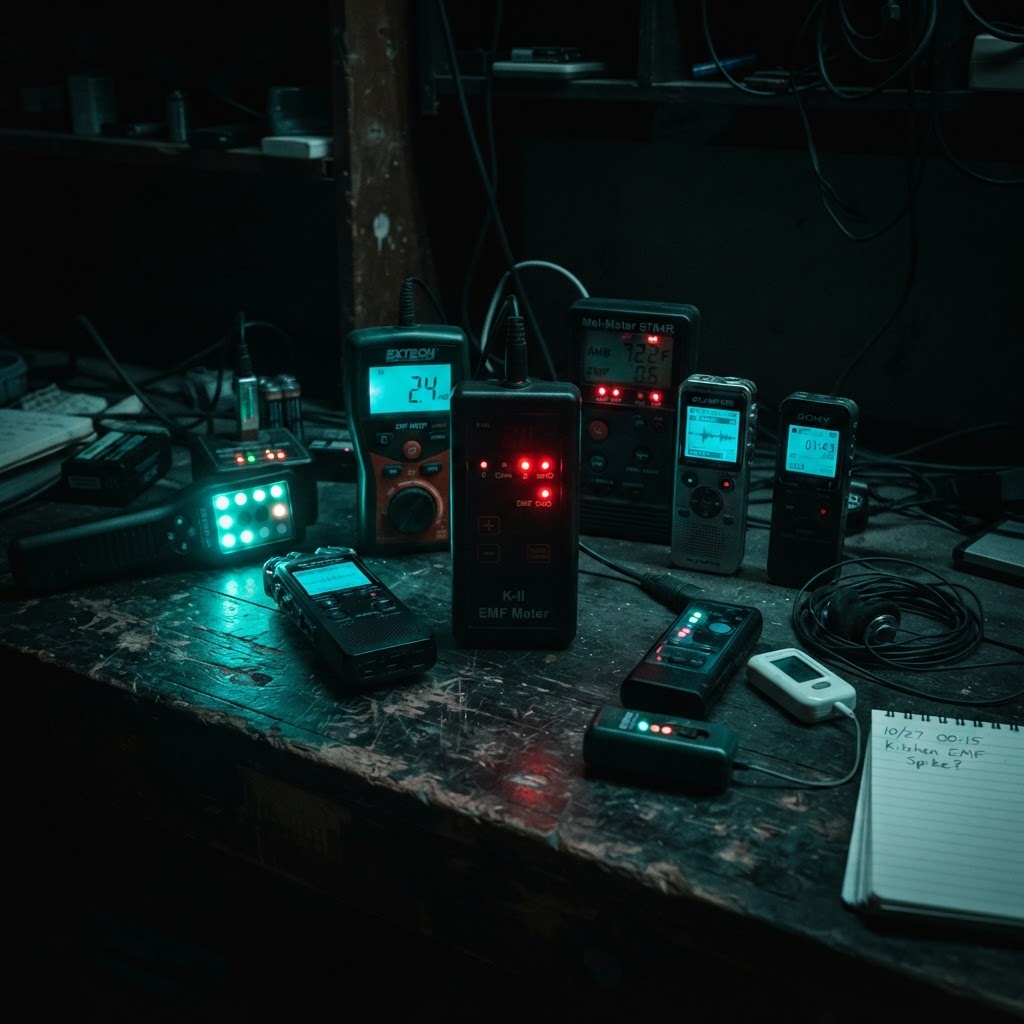
In the shadowed halls of North Georgia's historic sites, stillness can be deceiving. At Hauntology Labs, we understand that sometimes, the most compelling evidence of the paranormal isn't seen or heard, but felt as a disruption in the natural order of things. Motion sensors, often associated with security systems, have found a unique and valuable niche in paranormal investigations by detecting disturbances in areas where no physical cause should exist.
The core principle behind using motion sensors in ghost hunting is based on the theory that spirits or paranormal energy can displace air, create localized temperature fluctuations, or otherwise manifest in ways that trigger these sensitive devices. If a room is sealed, with no drafts or living beings present, and a motion sensor is activated, investigators consider this an anomaly worthy of further examination. It suggests that something, unseen by the human eye, has moved through the space.
Types of Motion Sensors Used
Several types of motion sensors are employed, each with its own detection method:
- Passive Infrared (PIR) Sensors: These are the most common type, similar to those used in home security. PIR sensors detect changes in infrared radiation. The theory here is that a spirit, often associated with cold spots, might register as a change in heat signature or as a disruption in the ambient IR field. When a PIR sensor detects a significant shift, it triggers an alert.
- Microwave Sensors: These emit microwave pulses and measure the reflection. Any movement that alters the pattern of the reflected waves will trigger the sensor. They are generally more sensitive than PIR sensors and can detect motion through some thin walls, though this is usually avoided in controlled investigations.
- Ultrasonic Sensors: These emit high-frequency sound waves and measure the return echo. Movement disrupts the wave pattern, triggering the sensor. Like microwave sensors, they can be quite sensitive.
Many investigators use a combination of these, or even simple laser grids, where beams of light are set up across an area. If any beam is broken, it indicates movement. Hauntology Labs often utilizes these setups during our private investigations and offers various types of sensors for sale.
Strategic Placement and Interpretation
The effectiveness of motion sensors heavily relies on their strategic placement and the interpretation of their readings. Investigators typically set them up in areas with a history of reported activity or where other phenomena have been detected, such as cold spots or reported apparitions. The goal is to create a "control" environment where natural motion is impossible.
- Eliminating False Triggers: Before an investigation begins, meticulous checks are made to eliminate all possible natural causes for activation. This includes ensuring there are no air currents from vents or windows, no vibrations from outside, and no pets or other living beings that could trigger the device. Sometimes, the sensors are placed in airtight containers with a small opening to prevent external air influence while still allowing for detection of internal disturbances.
- Correlation with Other Evidence: A motion sensor trigger is rarely considered definitive proof on its own. Investigators will often use motion sensors in conjunction with other equipment. For instance, if a motion sensor is triggered in a specific spot, they might immediately check EMF readings, temperature, or set up a camera to see if any visual or environmental anomalies coincide with the detected movement. This cross-referencing helps build a more robust picture of the event.
Enhancing Investigations with Motion Sensors
Motion sensors provide an objective means of detecting disturbances that might otherwise go unnoticed. They can operate continuously, covering large areas or specific points of interest for extended periods. This allows investigators to document events that occur when they are not actively observing a particular spot. At Hauntology Labs, we often incorporate motion sensors into our tours and investigations, offering a glimpse into the cutting edge of paranormal detection.
While the debate continues on what precisely triggers these devices in allegedly haunted locations, their ability to indicate an unexplained disruption in a controlled space makes them an invaluable tool for paranormal researchers. They offer a silent testament to potential activity, prompting further investigation into the mysteries that linger in the world around us. If you're interested in learning more about how these devices work, consider joining one of our upcoming free hunts where we often demonstrate their use.